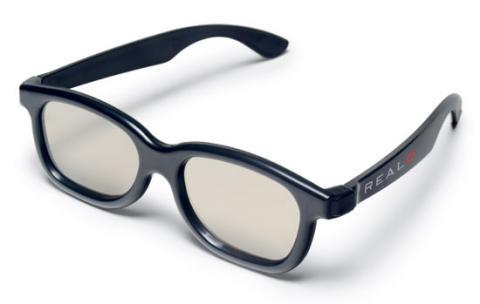
About stereoscopic vision
The principle of stereoscopic vision is based on the natural way our visual system perceives depth.
We receive an image of the world around us through our two eyes. Because our two eyes are offset from each other, the image received by each one is slightly different.
Our brain processes these two pieces of information, that is, it combines these two images to create a single three-dimensional (3D) perception.
This process is made possible by:
- convergence: the eyes turn toward the same point in space to align the images
- binocular disparity, also called parallax: our brain is able to analyze this slight difference between the two images and derive depth from it in the image of the world it perceives. This is how we see the world in relief.
The whole challenge of stereoscopic vision is to reproduce this process on the image of a screen.
Two images are therefore needed to form a stereo pair: one for each eye.
The horizontal disparity between the images is the very essence of stereoscopy. Stereoscopy would not work with 2 strictly identical images. Vertical disparity, however, is not allowed!
The stereo pair can traditionally be obtained in 2 ways:
- a pair of cameras, mounted side by side, exposing almost simultaneously and therefore ideally linked electronically.
- a single camera, moved sideways between the 2 sequential exposures.
In aerial imaging, it is this second method that is used. The aircraft (airplane, drone, balloon…) moves along a line between 2 images.
The resulting images are separated by a horizontal baseline. The distance between them is the stereo base.
The stereo pair must be taken with some care to match the fact that human eyes are horizontal and cannot comfortably fuse vertical differences. The horizontal difference that can be fused varies from person to person, which makes the size of the stereo base particularly important.
Alignment
The alignment of the two images must be perfect: they must be identical, except for the slight, essential offset in the horizontal plane (X axis), which produces the stereoscopic parallax (disparity). There must be no difference between the images in the vertical plane (Y axis).
Convergence
When we look at an object, each of our eyes places it at the center of its image: each of our eyes looks at this object. They are then said to converge on the object.
When the object is very far away, like a star, our eyes look in the same direction: the convergence angle is zero.
If the object is very close, our eyes start to cross: the convergence angle becomes large.
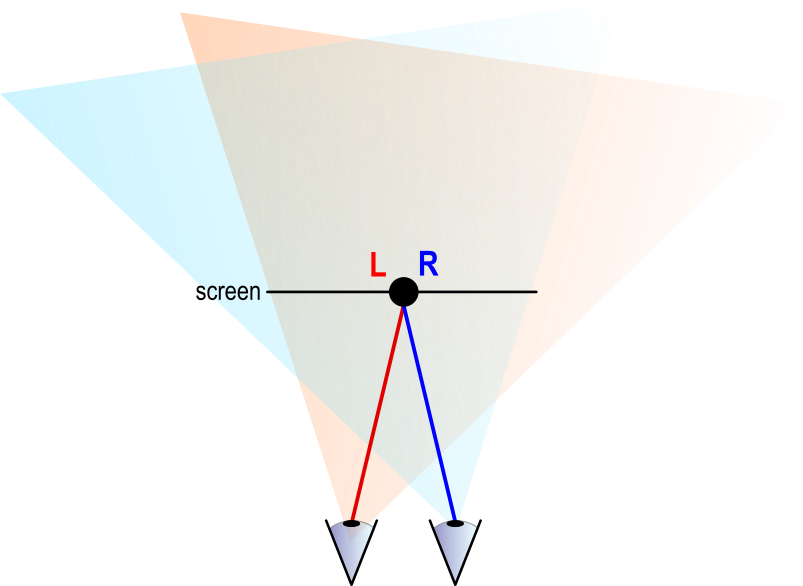
When a single image is projected on a screen, for example that of a ball, our eyes converge on the plane of the screen. The only distance perceived is the one between us and the screen. To alter this impression of depth, our eyes have to be made to converge on another point. To do this, let us project two images of this ball, one for each eye. If the images are superimposed, the ball appears at the distance of the screen. There is no relief. |
|
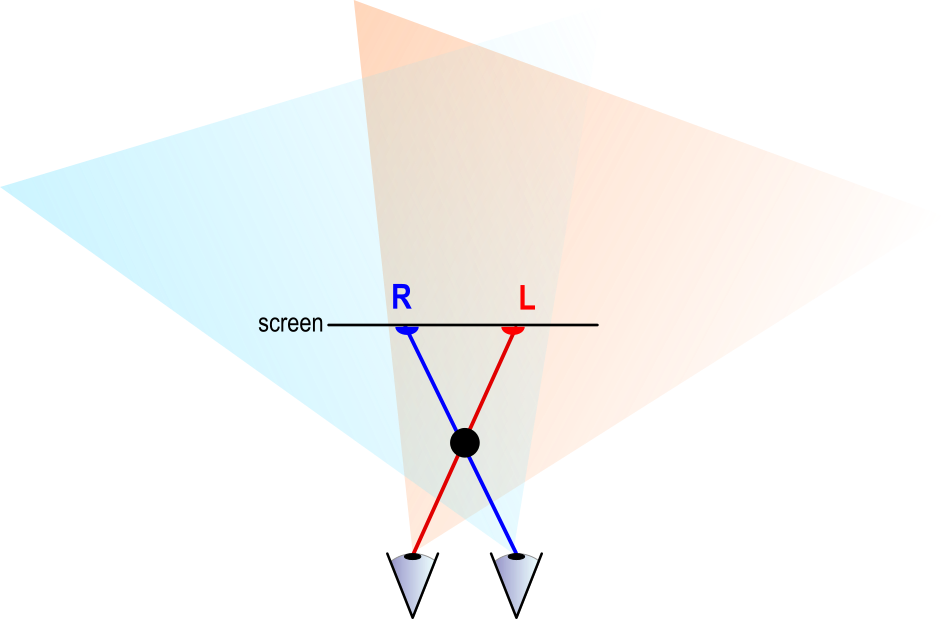
| For the two balls to appear closer, our eyes must cross. So the images are crossed: the image of the right-hand ball is shifted to the left. The image of the left-hand ball is shifted to the right. The ball will seem to float in front of the screen. The effect produced is an impression of popping out. |
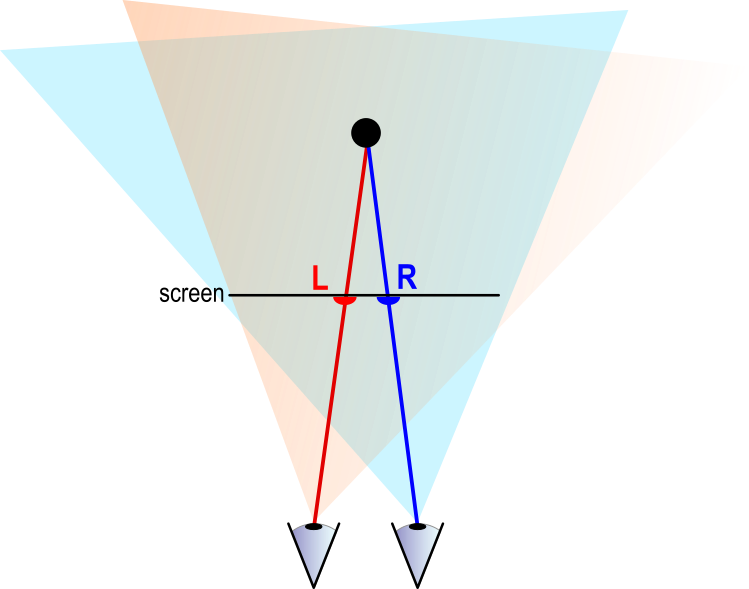
When the offset between the two images reaches the distance between our eyes, our eyes are parallel. The ball appears at infinity, or at least very far away. The effect produced is an impression of depth. |
|
How can each eye be shown a different image?
Three main categories of technologies can be distinguished.
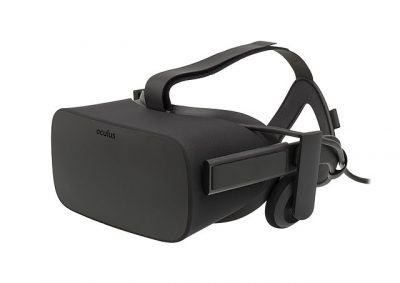
VR headsets |
In a virtual reality headset, dedicated optics for each eye delimit what each eye sees. The video shows the two images side by side.
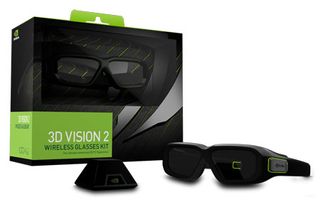
So-called active technologies |
So-called active technologies use shuttering synchronized with the display of successive Left/Right/Left/Right… images. The left eye is thus blocked when the right image is displayed, and vice versa. Persistence of vision does the rest, and the brain does not perceive the shuttering.
So-called passive technologies |
You can use polarized glasses. This technology relies on the fact that light can be treated as a wave vibrating along an axis. During projection, the image (and therefore the light) for one eye is projected along the vertical axis, and the other along the horizontal axis.
The glasses filter the light by acting like horizontal and vertical venetian blinds respectively. One lens lets through the light from one axis (and therefore one image) while blocking the light from the other axis (the other image).
Another technology uses colored glasses (traditionally red and blue) to filter the images, projecting superimposed images on the same channels. This method, anaglyph, has the advantage of being very inexpensive in terms of glasses and of being usable on other media, such as paper.